
 Melo Villareal
The Best Temples to Visit in and Around Bangkok
Bangkok, the vibrant and bustling capital city of Thailand, boasts some of the most breathtaking and historically significant temples in Southeast Asia. These temples are more than mere places of worship; they stand as architectural masterpieces that embody the rich cultural heritage and spiritual traditions of the Thai people.
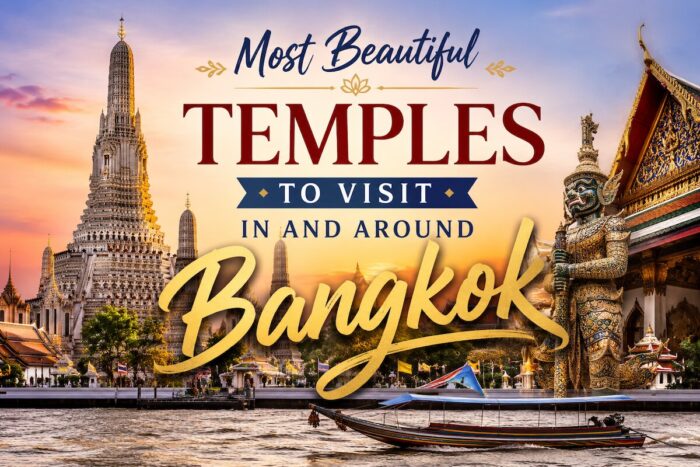
Most Beautiful Temples to Visit in and Around Bangkok
Featuring intricate carvings depicting mythological stories and historical events, stunning murals narrating tales of Buddhist lore, and shimmering gold leaf catching the sunlight, these sacred sites offer a mesmerizing glimpse into Thailand’s divine artistry and craftsmanship. They are truly must-visit destinations for anyone exploring Bangkok, providing a deep, immersive experience into the country’s spiritual and cultural essence.

One of the most famous temples in Bangkok is Wat Phra Kaew, also known as the Temple of the Emerald Buddha. Located within the grounds of the Grand Palace, this temple houses a small but revered statue of the Buddha carved from a single piece of jade. Visitors can also admire the intricate murals lining the temple walls, depicting scenes from Buddhist mythology.
Another temple worth visiting is Wat Arun, or the Temple of Dawn. Situated on the west bank of the Chao Phraya River, this temple is known for its distinctive spires, decorated with colorful Chinese porcelain. Visitors can climb to the top of the main prang, or tower, for panoramic views of the river and the surrounding city.
Historical Significance of Temples in Bangkok
Temples in Bangkok have a rich history and are an integral part of Thai culture. They are not only places of worship but also significant historical landmarks that reflect the country’s religious and cultural heritage.
Many of the temples in Bangkok were built during the Ayutthaya period (1351-1767), which was a time of great artistic and cultural flourishing. These temples reflect the era’s architectural style and are adorned with intricate carvings and murals depicting scenes from the Ramayana, a Hindu epic also popular in Thai culture.
The temples in Bangkok also played a significant role in royal ceremonies. For example, Wat Phra Kaew, located within the Royal Palace grounds, is the most important temple in Bangkok and the site of many royal ceremonies. The temple is home to the Emerald Buddha, considered the most sacred object in Thailand.
In addition to their cultural significance, the temples in Bangkok also played a role in global diplomacy. For example, King Mongkut (Rama IV) of Thailand sent a mission to the United States in 1856, which included a gift of two white elephants. The gift was intended to strengthen diplomatic ties between the two countries and was accompanied by a request that the US send a Christian missionary to Thailand. The request was granted, and the missionary, Dan Beach Bradley, was given permission to build a church within the grounds of the Wat Pho temple.
Famous Temples in Bangkok
Bangkok is famous for its stunning temples, each with its unique architecture and rich history. Here are some of the most famous temples in Bangkok that are worth visiting.

Wat Phra Kaew
Wat Phra Kaew is located inside the grounds of the Grand Palace in the historic center of Bangkok. Built in 1782 by King Rama I, it is Thailand’s most sacred Buddhist temple and houses the Emerald Buddha, a small jade statue believed to date to the 14th century. Unlike most temples, this one has no monks living here, as it serves as a royal chapel for ceremonies.
Visitors come to admire golden stupas, jeweled mosaics, mythological guardian statues, and detailed Ramakien murals around the cloister walls. The layered roofs, mirrored tiles, and intense gold decoration make it one of Bangkok’s most beautiful temples, especially in bright daylight.
Things to do include viewing the Emerald Buddha, walking the courtyards, and exploring the surrounding Grand Palace complex.
To get there, ride the BTS Skytrain to Saphan Taksin, take a Chao Phraya river boat to Tha Chang Pier, then walk about five minutes.

Wat Arun
Wat Arun, officially Wat Arun Ratchawararam, stands on the west bank of the Chao Phraya River in Bangkok’s Thonburi district, opposite the Grand Palace and Wat Pho. Named after Aruna, the Hindu god of dawn, the temple dates to the Ayutthaya period and became a royal temple under King Taksin in the late 18th century. Its 79-meter central prang, rebuilt and expanded by King Rama II and Rama III, is decorated with millions of Chinese porcelain fragments and seashells that glitter at sunrise and sunset.
Visitors climb the steep terraces for river views, admire guardian yaksha statues, explore the ordination hall, and watch monks’ evening chanting. The temple’s symmetry, river reflections, and delicate ceramic mosaics make it one of Bangkok’s most photogenic landmarks, especially at dusk.
Reach Wat Arun by Chao Phraya Express Boat to Tha Tien Pier, then a short ferry crossing, or by MRT to Sanam Chai Station, followed by a riverside walk and ferry ride across the river.

Wat Pho
Wat Pho, officially Wat Phra Chetuphon Wimon Mangkhalaram, is one of Bangkok’s oldest and most revered royal temples, famous for the 46-meter Reclining Buddha covered in gold leaf and mother-of-pearl inlays. It sits in the historic Rattanakosin district beside the Grand Palace and near the Chao Phraya River.
Founded in the 16th century and rebuilt by King Rama I in 1788, it became Thailand’s first public education center and the birthplace of traditional Thai massage, whose school still operates today.
Visitors explore 1,000+ Buddha images, four giant chedis honoring early Chakri kings, murals depicting cosmology, and peaceful courtyards ideal for reflection or a massage session.
Its harmony of colors, glittering ceramics, symmetry, and serene atmosphere make it among Bangkok’s most beautiful temples.
Reach it by MRT Sanam Chai station (10-minute walk), river ferry to Tha Tien pier, or taxi from the central districts. Dress modestly, cover your shoulders and knees, and arrive early in the morning to avoid crowds and heat during year-round visits.

Wat Saket
Wat Saket, commonly called the Golden Mount Temple, stands in Pom Prap Sattru Phai district near Ratchadamnoen Avenue, on the edge of Bangkok’s old city. Built during the Ayutthaya period and later expanded by King Rama I and Rama III, its artificial hill rises about 80 meters above sea level. A chedi added in the 19th century houses Buddhist relics brought from India.
Visitors climb about 300 gentle steps spiraling around shady trees and bells, reaching a panoramic terrace overlooking Rattanakosin Island, canals, and the modern skyline. The annual Loy Krathong temple fair fills the grounds with lanterns, markets, and chanting. Inside are murals depicting Buddhist cosmology and meditation areas for quiet reflection.
The temple’s beauty comes from contrast: a forest-like hill in a dense city, a golden stupa glowing at sunset, and a peaceful atmosphere unlike busier royal temples.
To get there, take the MRT Blue Line to Sam Yot Station, then walk 15 minutes or ride a tuk-tuk or river ferry to nearby Phan Fa Pier.

Wat Traimit
Wat Traimit, officially Wat Traimit Withayaram Worawihan, sits at the southern edge of Bangkok’s Chinatown in Yaowarat, near Hua Lamphong railway station. The temple is world-famous for housing the Golden Buddha, a 3-meter-tall, solid-gold statue weighing about 5.5 tons — the largest of its kind.
Believed to date to the Sukhothai period (13th–14th century), the statue was once covered in plaster to hide it from invading armies. In 1955, workers accidentally dropped it while moving it, cracking the outer layer and revealing pure gold beneath.
Visitors explore the multi-level museum explaining Chinese immigration to Thailand and the Buddha’s discovery, admire intricate Thai architecture, pray, and enjoy views over Yaowarat’s rooftops. The gleaming gold image under natural light gives the temple an unusually radiant, almost luminous atmosphere, making it one of Bangkok’s most visually striking temples.
To get there: take the MRT to Wat Mangkon or Hua Lamphong, or the BTS to Saphan Taksin, then take a taxi; it’s walkable from Chinatown’s street food areas.

Wat Suthat
Wat Suthat Thepwararam is a royal temple in Bangkok’s old town, beside the famous Giant Swing on Bamrung Mueang Road, near the Grand Palace and City Hall. Begun by King Rama I in 1807 and completed by Rama III, it houses the massive bronze Phra Si Sakyamuni Buddha brought from Sukhothai.
The temple is known for its serene scale: a vast courtyard, low crowds, and perfectly balanced architecture. Inside the ubosot, hand-painted murals depict Buddhist cosmology and early Bangkok life, while carved teak doors show refined Rattanakosin craftsmanship.
Visitors come to admire sunset light across the red roof tiles, practice quiet meditation, and photograph the Giant Swing framed by temple walls. Its proportions, warm colors, and calm atmosphere make it one of Bangkok’s most elegant temples.
Reach it by MRT Sam Yot, then a 10-minute walk, river boat to Tha Tien, plus taxi, or any Old City bus or tuk-tuk. Early morning visits offer monks chanting and cooler temperatures daily.

Wat Ratchanadda
Wat Ratchanadda, formally Wat Ratchanatdaram Worawihan, stands in Bangkok’s Phra Nakhon district beside Loha Prasat and near the Golden Mount. Commissioned in 1846 by King Rama III for his granddaughter Princess Somanass Waddhanawathy, it blends Sri Lankan–inspired architecture with Thai design.
The temple’s centerpiece, the Loha Prasat, is a rare metal castle with 37 spires symbolizing virtues on the path to enlightenment; only three such structures have ever existed worldwide, and this is the last surviving example.
Visitors can climb its spiraling interior levels to a serene rooftop terrace, explore prayer halls, view murals and Buddha images, and join merit-making rituals. At dusk, the golden spires glow, reflecting across nearby canals and markets, creating one of Bangkok’s most photogenic skylines.
The temple feels elegant because of its geometric symmetry, shimmering metalwork, and open terraces rather than heavy ornamentation.
Getting there: take the MRT to Sam Yot Station and walk about 10 minutes, or ride a Chao Phraya Express boat to Phan Fa Pier nearby.

Wat Benchamabophit Dusitwanaram
Wat Benchamabophit Dusitwanaram, often called the Marble Temple, stands on Si Ayutthaya Road in Bangkok’s Dusit district, near the royal palace area and Parliament. Commissioned by King Chulalongkorn (Rama V) and completed in 1911, it combines traditional Thai planning with European symmetry and gleaming Italian Carrara marble.
Highlights include the ordination hall with layered golden gables, a cloister displaying 52 Buddha images representing styles from across Asia, peaceful canals, and morning almsgiving to monks. Visitors also explore the small museum, pay their respects at the King Rama V statue, and stroll the tree-lined avenues around the grounds.
Its beauty comes from luminous white marble that reflects sunrise and sunset, balanced proportions, and a calm, spacious atmosphere unlike that of crowded riverside temples. The reflections in the courtyard pond enhance its elegance.
Getting there: take the MRT Blue Line to Sam Yot or Sanam Chai and continue by taxi, or ride buses along Ratchadamnoen Avenue. From Khao San Road, a taxi takes about ten minutes outside rush hour.

Wat Suwannaram Ratchaworawihan
Wat Suwannaram Ratchaworawihan
Wat Suwannaram Ratchaworawihan is a serene royal temple in Bangkok’s Bangkok Noi district on the west bank of the Chao Phraya River. It dates back to the Ayutthaya period and was restored by King Rama I, who later made it a royal monastery.
The temple is famous for rare early Rattanakosin-era murals inside the ordination hall (ubosot). Painted by master artists, the dramatic Jataka scenes feature expressive figures, rich movement, and unusually emotional storytelling rarely seen in Thai temple art. An elegant Ayutthaya-style chedi and graceful Buddha images enhance its historic character.
Visitors can quietly explore the peaceful grounds, admire the murals, and experience a calm riverside atmosphere far from crowded tourist temples.
Wat Suwannaram is considered one of Bangkok’s most beautiful temples for its refined architecture, exceptional classical paintings, and tranquil setting.
To get there, ride the Chao Phraya Express Boat to a nearby pier in Bangkok Noi, then walk or take a short taxi ride.

Wat Prayoon (Wat Prayurawongsawat Worawihan)
Wat Prayoon is a serene riverside temple in Bangkok’s Thonburi district, near the Memorial Bridge and a short walk from Pak Khlong Talat flower market. Founded in 1828 by Somdet Chao Phraya Borom Maha Prayurawongse during the reign of King Rama III, it is famed for its massive white bell-shaped chedi (Phra Borommathat Maha Chedi), which enshrines sacred Buddha relics and for which it won a UNESCO conservation award in 2013.
Visitors can stroll through the tranquil turtle pond, explore the miniature “Khao Mo” rock garden dotted with shrines, and admire murals inside the ordination hall. The temple’s blend of riverside breezes, gleaming white stupa, reflective water, and peaceful greenery makes it one of Bangkok’s most beautiful temples—especially at sunset when the chedi glows softly.
Getting there: take the MRT to Sanam Chai and walk about 15 minutes, ride the Chao Phraya Express Boat to Memorial Bridge Pier, or go by taxi.

Wat Kalayanamit Woramahawihan
Wat Kalayanamit Woramahawihan is a riverside Royal temple in Bangkok’s Thonburi district on the west bank of the Chao Phraya River, opposite Pak Khlong Talat. Founded in 1825 during King Rama III’s reign by Chinese-Thai nobleman Chaophraya Nikonbodin, it blends Thai and Chinese aesthetics.
The highlight is Luang Pho To, a colossal seated Buddha about 45 meters tall and among Thailand’s largest indoor images. The ubosot features intricate murals and red-lacquer doors, while a Chinese-style bell tower houses the revered “Good Luck Bell,” rung for prosperity. Visitors stroll courtyards, feed fish at the pier, watch sunset over the river, and join merit-making ceremonies popular with locals seeking business fortune.
The temple feels serene because of its spacious grounds, harmonious colors, and dramatic river backdrop. Reach it by Chao Phraya Express Boat to Memorial Bridge or Yodpiman Pier, then a short walk or tuk-tuk; ferries also cross from Rattanakosin. Nearby markets and shrines make it an easy cultural stop for visitors today.
Temples Beyond Bangkok

Wat Pha Sorn Kaew
Wat Pha Sorn Kaew is a mountaintop Buddhist temple in Khao Kho District, Phetchabun Province, about 5–6 hours north of Bangkok. Perched above misty valleys at roughly 830 meters elevation, the complex overlooks sea-of-clouds views during cool mornings.
Construction began in 2004 under the guidance of Phra Ajahn Chaiyabun and patrons who envisioned a meditation sanctuary rather than a typical monastery. The five seated Buddhas represent the five past Buddhas and symbolize the stages of enlightenment. Walls and pagodas are decorated with millions of colorful mosaic tiles, porcelain, and teacups donated by devotees.
Visitors wander terraced gardens, climb stairways to white stupas, meditate, or photograph sunrise fog. Nearby cafés and viewpoints complement the visit. Its surreal mosaics, dramatic mountain setting, and modern interpretation of sacred architecture make it one of Thailand’s most beautiful temples, often mistakenly associated with Bangkok tourism.
To get there, take a bus from Mo Chit to Lom Sak or Khao Kho, or hire a songthaew taxi, driving via Highways 21 and 12.

Wat Phra Si Sanphet
Wat Phra Si Sanphet stands in the center of Ayutthaya Historical Park, about 80 km north of Bangkok in Ayutthaya Province. It was the royal temple of the Ayutthaya Kingdom from the 15th to 18th centuries and formed part of the old Grand Palace complex.
The temple once housed a 16-meter gold-covered Buddha image, which was later destroyed during the Burmese invasion of 1767. The famous three bell-shaped chedis contain the ashes of Ayutthayan kings and represent royal authority and sacred protection.
Visitors explore wide brick courtyards, ruined halls, and elevated platforms that show how court ceremonies were arranged. The aligned stupas glow beautifully at sunrise and sunset, lending the site a serene elegance that rivals that of any temple in Bangkok and making it one of Thailand’s most admired historic landmarks.
Reach it by a 1–1.5-hour train from Krung Thep Aphiwat station, a Mo Chit minivan, or driving Highway 1/32. From Ayutthaya station, use a bicycle, tuk-tuk, or river boat to the park.

Wat Phra Mahathat
Discover the ancient and captivating Wat Phra Mahathat, located just east of the Grand Palace and next to Pa Than Bridge in Phra Nakhon Si Ayutthaya, Thailand. Believed to have been built by King Boromaraja I in the 1370s, this royal Temple of the Ayutthaya Kingdom is one of the oldest and most significant in the region’s history, as it once housed the Buddha’s holy relic.
Many important royal ceremonies were held here until the Ayutthaya Kingdom fell in 1767, when the temple was destroyed by fire and abandoned.
Nowadays, the temple is part of the Ayutthaya Historical Park and is home to a number of impressive attractions, including the remains of pagodas and octagonal pagodas, a royal hall, small temples, murals beneath a Bodhi tree, and the famous sandstone Ayutthaya-style head of the Buddha image in a tree’s root.
Nearby attractions include the Ancient Palace, Wat Phra Sri Sanphet, Wat Ratchaburana, Wat Phra Ram, and Vihara Phra Mongkhon Bo Phit. Immerse yourself in the rich culture and history of this remarkable temple and explore its beautiful architecture and art.
Religious and Cultural Importance
Bangkok is home to some of the most beautiful and spiritually significant Buddhist temples in the world. Buddhism is the predominant religion in Thailand, and visiting these temples is an essential part of Thai culture and spirituality. The temples serve as a place of worship, meditation, and contemplation for both locals and visitors.
Buddhist temples in Bangkok are known as “wats” and are characterized by their intricate architecture, colorful decorations, and ornate statues of Buddha. The most famous temples in Bangkok include Wat Phra Kaew, Wat Pho, and Wat Arun. Each temple has its unique history and cultural significance, making it a must-visit destination for anyone interested in Thai culture.
Visitors to these temples should dress modestly and remove their shoes before entering the temple grounds. It is also important to respect the temple’s customs and traditions, including refraining from touching or sitting on any Buddha statues. Visitors should also be mindful of using incense and follow appropriate etiquette when lighting it.
Apart from Buddhist temples, Bangkok is also home to the Hindu temple Sri Mahamariamman. This temple is known for its colorful and ornate decorations, as well as its collection of ancient weapons. The temple is a cultural heritage site and a must-visit destination for anyone interested in Hindu culture.
In addition to visiting the temples, visitors can explore the amulet market to purchase amulets and other spiritual items. The market is a fascinating place to learn about Thai spirituality and culture.
Visiting the Temples
Visiting the temples in Bangkok is a must-do activity for any traveler who wants to immerse themselves in the rich cultural heritage of Thailand. The city is home to hundreds of temples, each with its own unique architecture, history, and spiritual significance. Some of the most popular temples to visit in Bangkok include Wat Phra Kaew, the Temple of the Emerald Buddha, and Wat Pho, the Temple of the Reclining Buddha.
One of the best ways to experience the temples is by taking a boat ride along the Chao Phraya River. This will give you a chance to see some of the most beautiful temples in the city, including Wat Arun, the Temple of Dawn, which is located on the west bank of the river. The temple is known for its stunning architecture and intricate details, which are especially beautiful when lit up at night.
Another popular temple to visit in Bangkok is the Marble Temple, also known as Wat Benchamabophit. This temple is located in the Dusit district and is known for its beautiful white marble exterior. Inside, visitors can see a stunning collection of Buddhist art and artifacts, including a statue of the Buddha made from a single block of jade.
Other temples worth visiting in Bangkok include Wat Suwannaram, located in the Thonburi district and known for its beautiful architecture and intricate details, and Wat Prayoon, on the west bank of the Chao Phraya River, known for its stunning pagoda and beautiful gardens.
For visitors who want to venture outside Bangkok, there are many beautiful temples in the surrounding areas. One of the most popular is Wat Pha Sorn Kaew, located in the Khao Kor district and known for its stunning views and beautiful gardens. Another popular temple to visit is Wat Phra Sri Sanphet, located in the ancient city of Ayutthaya and known for its beautiful architecture and historical significance.

Frequently Asked Questions
What are the three famous temples in Bangkok?
The three most famous temples in Bangkok are Wat Phra Kaew, Wat Pho, and Wat Arun. These temples are popular among tourists and locals alike and are must-visit destinations in Bangkok.
Which temples are worth visiting in Bangkok?
Apart from the three famous temples, there are several other temples worth visiting in Bangkok. Some of these temples include Wat Benchamabophit, Wat Saket, Wat Intharawihan, and Wat Ratchanatdaram. Each of these temples has its own unique architecture, history, and significance.
What is the most famous shrine in Bangkok?
The most famous shrine in Bangkok is the Erawan Shrine, which is located in the heart of the city. This shrine is dedicated to the Hindu god Brahma and is believed to bring good luck and prosperity to those who visit it.
What is the most ancient temple in Bangkok?
The oldest temple in Bangkok is Wat Mahathat Yuwaratrangsarit, built during the Ayutthaya period. This temple is known for its ancient relics and artifacts, and is a popular destination for history buffs and archaeology enthusiasts.
What is the biggest temple in Bangkok?
The largest temple in Bangkok is Wat Phra Dhammakaya, which spans over 400 acres. This temple is known for its unique architecture and modern design, and is a popular destination for meditation and spiritual retreats.
What is the dress code for visiting temples in Bangkok?
When visiting temples in Bangkok, it is important to dress modestly and respectfully. Visitors should avoid wearing shorts, sleeveless shirts, and revealing clothing. It is also customary to remove shoes before entering the temple and to cover the shoulders and legs with a scarf or shawl.
Bangkok Tour Packages
Klook.com
Avoid the hassle! Find the best places to stay in Bangkok and book your accommodation with Booking and Agoda!
Want more updates about new package tours and tourist attractions in Bangkok that you can add to your itinerary? Like, Follow, and Subscribe to OutofTownBlog.com on Facebook, Twitter, Instagram, and Pinterest, and Team Out Of Town on YouTube for more Bangkok tourist spots.
Read:
- Travel Guide: Historic City of Ayutthaya
- 8 Best Scenic Attractions To Visit in Bangkok, Thailand
- Bangkok – Awesome Place For Shopping and Relaxation
- BANGKOK TRAVEL GUIDE: Itinerary, Things to Do and More
- Six Must-Visit Places for First Time Travelers in Bangkok